Wednesday, April 28, 2010

Short Story: A Son Damned

Meet Emil Volkhart, an entirely ordinary businessman. His graying hair caused from the stress of running his three businesses properly, and the wrinkles disfiguring his face are all too soon earned. Emil has a wife, and three children. He's a good husband, having stayed faithful to his wife throughout the years, supporting the family on his back alone. This was not always the case, for there was a time when Emil lacked not only a family of his own, but also his mediocre success in life. Yes, in fact Emil was never much of a level-headed person before his success, nor did he ever have the head for running an establishment. He still doesn't. Emil merely happened upon things man shouldn't.

In a drunken daze, a cold october night, Emil agreed on various committments and deals to a single, very helpful man. For a long time, he couldn't remember what. It didn't matter, for as early as the next day, when the headache still laid thick over his mind, his estranged grandfather passed away, and as the only Volkhart alive, Emil was left the old man's continental transport service. It made a meagre two gold a year, what with travel costs and repairs. The lack of customers that had plagued it didn't help. But everything seemed to work out. A new assistant asked to work beneath him, and after he took her under his wing, the business came back to Volkart Transports. Customers came in every day with something to send, and the weak old horses proved to have more fight in them then ever before. Business looked good.

A year later, Emil married his assistant, the both of them no longer content with nights of passion in the man's office and home. The workers didn't mind, they'd known them both for a good eleven months, after all. Sierre was as good a wife as she was his assistant, faithful and loving, waiting for him each day with food ready. He gave her larger responsibilities as the offer came to buy out both of his competitors, and suddenly, Volkhart Transports spun over the entire nation.

Emil couldn't stay in one place, always having to go to new cities, look over his offices, and buy out new locales. Still, fate didn't seem to be satisfied, and the offer in his home town came for him to uphold the bank as well. He took to the task with glee. He'd lived his entire life in that city, and the bank was one of it's defining features. His father worked in there, after all.

Business yet again flourished, and his wife looked over the bank whilst Emil was forced out on trip after trip. He returned to find his wife bearing his child, and was ecstatic with the idea.
The world had no intention of slowing down however, and the reputation of this up and coming businessman soon spread to the main city, wherefrom he was soon offered to buy up the the postal delivery, it being in great need of some major aid, a cheap affair for the man. Small change almost. That business too, flourished in short time. His wife finally birthed his child. A son. Emil was a little torn about not being there when it happened, but such are the woes of a travelling man. He came home, nonetheless, and spent more time with his lovely wife.

They named their son Lucien. His wife seemed to love the name, and Emil didn't mind. It was a nice enough name. Years begun to pass, and Emil ever more begun to regret missing large halves of each year, only half getting to see his son grow. Four years later, his wife bore another child, much to Emil's rejoicing. A little daughter. Emil didn't mind a daughter, of course, but he would much rather have another son to grow up strong, and continue his legacy in one of his three businesses, all of them fairly successful.

Another six years, young Lucien was ten, and his sister six, and another sister joined the family. Emil was, again, not all too excited. He still did not mind his daughters, he loved them just like young Lucien, but they were still destined to take another name. It was simple tradition.

At age fourteen, Lucien began helping his mother at the bank, showing an incredible head for numbers and business, his father and mother into the marrow, Emil thought. As the years passed, and Lucien grew to become a fine young Volkhart, Emil began planning for him taking over the bank entirely, his gift for coming of age. When Lucien came of age, however, it was an entirely different story. A man came knocking at the door, a man Emil had met before, but could not place. He met thousands of people every year, how could he hope to remember one man? The man claimed Lucien would come with him.

The night became to come back, for whatever reason Emil could not explain. He had met this man before, his great benefactor. A promise of wealth and love, in the simple exchange for his firstborn son. Emil, who would obviously never have kids, had recklessly agreed. Lucien seemed to accept the idea without much hassle, and his wife said nothing. Emil saw her for what she was that day, and the way she looked at the man who came to his house.

The loss of his son tore at Emil like a knife to the heart. His businesses began to fail, slowly but surely. The bank still ran well, but it alone could not support either of the other two, and they were both sorely lacking customers, or repairs.

Emil hasn't tried for a new son. It isn't in him anymore. Whatever Lucien is doing, he knew this was coming.

Classical: Fighters

That smarmy homonculus! Daring to log onto my database, and provide reasonably accurate information? Pah. Luckily, ladies, gentlemen and otherwise, I've caught the offender red-handed, and whilst he's making his way into my painfully slow death trap, I'll spend my time talking about a -real- D&D class. So let's get down to Fighters!

The Fighter is a defender. What's that mean, you ask? It means they defend their party, and make the bad, evil monsters attack them instead. Such is the default class, anyway! There is a type of Fighter for everyone, and regardless of what your schtick is, you're bound to at least look twice! Let's have a look see, shall we?


Ways of Fighting?
Fighters differentiate from one another by specializing into so-called talents. How talented you can be with intelligence as your dumpstat is questionable, but our brawny heroes seem to manage!

The first talent off the bat is Battlerager Vigor, it gives you temporary hit points, and they even stack with the power! Hell, even better, if you use an Invigorating power and manage to miss every single target (should've practiced on that barn, boy), you still get temporary hit points equal to your constitution modifier. Right then, next in l-.. Wait, there's more? Egads. Battleragers ALSO get +1 to damage with melee and close attack -while- wearing light armor or chainmail, IF they have temporary hitpoints, something you should never be without. This damage increases if you wield an axe, a hammer, a mace or a pick, so stick a twohanded Greataxe in there, and go wild, baby.

Second up on the pitch is the Tempest Technique. Despite sounding like something out of a bad Steven Seagal movie, it is in fact another talent, and it's perfectly acceptable! Tempest Technique gives you +1 to attack rolls if you're dual wielding. BUT - my muffled assistant notes - they have to have the offhand property, meaning they're more obviously than not somewhat gimped in damage, sadly, and you rely on powers to make that better. Don't worry, the wizards tried to make this up. They're also giving you Two-Weapon Defense, even if your scrawny self can't get it normally. So that's nice. You also get +1 damage when you dual wield, +2 if they're offhanders. Haven't I heard something like this before? Consistency is nice, at least!

Third up are the two talents simply called Weapon Talent! (One-handed and Two-handed, respectively.) These are the simplest of all the talents. No-nonsense cousins to their flashy comrades, the Weapon Talents simply give you a flat +1 bonus to attack rolls with the chosen group of weapons, regardless of how you wield it, or what colour it is. If you want to wear sick armor, and stick a shield on there, this is what I recommend, so you don't miss out on the features of Battlerager or Tempest.

Fourth, and last on the field is the hilarious buck-toothed stepchild of the Tempest Technique, namely the Brawler Style... talent. What's the Brawler do, then? Well, they brawl. Let's get a piece of this craziness. When a brawler holds a weapon in his main hand, and has -nothing- in his off hand, he gains +1 to AC, and +2 to Fortitude. So that's pretty nice, right? No, because you're giving up a shield, and miss out on both AC, and magic properties. Well, let's move on! What else does the brawler-man get? You gain a.. profiency with unarmed attacks.. yay.. and a +2 bonus to grab attacks and attacks to move a creature grabbed by you. Egads. I know where this is going. To be total dicks, wizard decided to add the fact that you cannot use a spiked gauntlet to boost your damage, because you don't get the proficiency. You do however get the grab bonus. -2 to hit for 1d2 more damage? Your choice. *snickers*

Features of Fighting
That's talents down. Let's get right down to the meat of the class. But wait, what's this? Another choice you say? Sigh. Right! All warriors nowadays get the choice of their defining feature, namely Combat Superiority or Combat Agility. Combat Agility was added in to appeal to those of you whom take the Tempest Technique, boost your dex instead of your wisdom, and have terrible riders on your powers. They're pretty close in the end. Superiority gives a bonus equal to your wisdom modifier to all your opportunity attacks, and forces your opponent to lose his move action, if that's what provoked the attack from you. Combat Agility IS an opportunity attack, and lets you shift up to your dexterity modifier towards the man who just ran away, and then smack him silly with the power in question. They're also knocked prone. Note that unless you pump Dexterity to 18 in the start, this is often worse than superiority, due to the fact that Superiority is automatic, and that you might not always be able to get to the aggressor with the shift on this power, leaving you useless where you would've stuck him with the attack otherwise.

Right, let's get down to it! All Fighters get something called Combat Challenge. Firstly, whenever you attack an enemy, it gets marked, giving it -2 to attack unless it targets you. Sweet, right? It gets better. This mark is applied regardless of whether or not you hit, so people who like the Brawler Style above, rejoice. As part of this feature, you also get an Immediate Interrupt (Also named Combat Challenge), that allows you to use a melee basic attack against an adjacent, marked enemy if he tries to shift OR attack someone but you. Sweet right? It is. Of all the defender, only the paladin has nicer features, when it comes to punishment, but we'll get to that in the paladin talks.

All Fighters also get the ability to wear every armor sans Plate, and start with the best weapon proficiencies in the game, able to handle any military or simple weapon. For those superior ones (and yes, they are better in theory), you'll still need a feat. You get a +2 bonus to fortitude for being the scrappy sort, and your power source is martial like the Warlord, meaning you actually practiced to get this good, instead of reading pamphlets on magic, or asking the nice gods/spirits for help. Atop this you get sweet amounts of hitpoints, about the same as every other defender, and a godly amount of healing surges. Only the paladins get more by default, and only by one, so it doesn't really matter. You get three skills from the following list:

Athletics
Endurance
Heal
Intimidate
Streetwise

So, not only do you get busted for a skill less than everyone else, you also have pretty bad choices up there. I suggest any fighter take Athletics, it keys off Strength. Endurance or Heal depending on how much you've boosted your Wisdom/Con, and then pick which one of the two last you want to be the least bad at. Or just skip them all together and pick up Heal. Humans would do well to pick another skill. Perception comes to mind.

Fighting Feats
Now we've come to the stuff that makes you. Feats are dangerously essential, and there are bucketloads of them, so I won't even start to scrape the surface. I instead have compiled the smallest of lists to serve you on this day.

  • Shield Push (PHB): If you're using a shield, consider getting this feat on level 1. If you don't pick it up on level 1, consider getting it on level 2. If you didn't, you're making kittens cry. This is a staple of shield fighters.
  • Forceful Opportunist (Dragon 379): Any weapon talent fighter should consider this feat, because pushing the battlefield around is crazy good. Even funnier if you use a polearm, and push them over the entire battlefield, or off a cliff. Always hilarious.
  • Agile Superiority (Dragon 378): This takes Combat Superiority, and keys it off Dexterity instead of Wisdom, so if you're a dex based fighter, and think you could do without the so-so opportunity attack of Combat Agility, you should take this.
  • Mobile Challenge (Dragon 378): A feat that lets you shift 1 step after attacking with your Combat Challenge feature. Very interesting, and lets you shift after the people who try to flee.

Fighting Powers
So what can you actually do? Again, I won't list everything, just scratching at the surface for you. There are a plethora of powers, at least two for every style, and some that are compatible with almost whatever talent you had in mind.

  • Tide of Iron (At-will, PHB): If you're a shield fighter, you want this. It does damage, pushes, shifts you, and does your laundry on sundays.
  • Dual Strike (At-will, Martial Power): This is for the dual-wielders out there, and it lets you bring the pain to two enemies at the same time. Remember, even if you miss, they're still marked.
  • Weapon Master's Strike (At-will, Dragon 382): This is an interesting power, with something for almost anyone. Before the attack, it allows you to draw another weapon if you want, so you can use it to shift your gear around for added hilarity. It does basic damage, and then something extra depending on which weapon you're using. Highly recommended for spear fighters, humans, and anyone who can't find something to fill their at-will slots.
  • Rain of Steel (Daily 5, PHB): Why am I bringing up a level 5 daily? Well, this is a pretty major gig. If you get to level 5, you should seriously consider this power, as enemies will take damage for starting next to you. Just watch out for being dazed or stunned, and watch the damage skyrocket more than a raging barbarian in big fights.

Who Fights?
Who makes a good Fighter? Well, that's a simple equation. Look at the race list. Now look at the class. Look at the race list again. Remove gnomes, changelings, goblins, kenku, githyanki, deva, and tieflings. Kalashtar also. There, everyone else, you can make it work. Here's my four favorites:

  • Dragonborn: They're f-ing dragons, man. Of course they're good at fighting. So the Charisma doesn't help you (still wondering why they don't have constitution), but EVERYTHING else does. The breath will let you mark everyone you target, hit or miss, which is insane. Add hurl breath and enlarged breath respectively for extra sinister laughter moments.
  • Dwarf: These guys make up for the lack of strength with a super-hard determination. Constitution and Wisdom means they make rock hard shieldwalls, and the racials only affirm this fact. Slap on a hammer or an axe. Go to town. They also like beer. And fighting.
  • Warforged: ROBOTS. If you're still not sold on the idea, how's about the plus to Strength and Constitution? No? Well, look again, because these miniature godzillas have a truckload of fighter feats, including a sick feat on first level, letting them knock people prone with their opportunity action. Have we heard this before? Best of both worlds.
  • Human: These guys make funnily sick warriors. You might not win the competition for biggest stats, only having a plus to one ability, and I'll hate you if you don't put it in strength. Besides that, humans get +1 to all the non-ac defenses by default, as well as a bonus feat, which will help your career considerably. The extra skill is icing on the cake, but the extra at will power you can make great use of. Combine with some of the best feat support in the game for any class, and you've got a solid pick.


So that's that. The Fighter class. I won't get into Paragon Paths, nor will I Epic Destinies. Such things are for the future, my dear readers. It seems my assistant managed to escape during my monologue. Blasted paperclips! I shall leave you now, and hunt him down. I best reconstruct my death-machine too. Why does it even have ventilation shafts?

SRM

Classical: Warlords

I don't have much time. I managed to crack the shady review mans password (really. SRMFTW IS a bad password, no numbers or special characters at all) and I have a chance to spread the truth to you poor misguided fools. SRM does not know squat about true power in D&D, I bet he'll start off by writing about something silly. Like fighters. No real imagination! It is my task, as the Shady Review Mans Shady Assistant to enlighten you!

Warlord
Few classes in D&D 4.0 makes my mind race as much as the Warlord. Just taste the word, what ideas, what concepts does it bring into your mind? A powerful captain yelling at his troops to hold the line? A mighty general leading his troops towards victory? Or perhaps the sergeant keeping his group focused towards their goal?
Me, I think of the frontline fighter, standing toe to toe with the evil hordes. Yelling "Hold the line", "Stand Fast" and other cliché phrases.
In many ways, that is what the warlord of D&D is. He's not the tough Fighter, keeping the enemies attention on himself. He's not the nimble Rogue dancing around, stabbing into vital organs. And he's not the powerful Wizard raining down destruction on the heads of the foes (and sometimes, friends aswell).
He is the leader, the one standing in the fray, being an inspiration to them all, he can't take as much punishment as the Fighter, he can't do damage like the Rogue. He can however hold his own. He'll stand by the Fighters side, beating on the enemies and aiding his allies.

The warlords strength is in the so called Enabling. Enabling means that he enables his party to reach the pinnacle of their potential. He can still heal, with his "inspiring word" and he can still buff his allies in various ways. And in a party with physical characters. He's at his best.

Let's take a look at the different types of Warlords.

First, let's have a look at the different kinds of leadership they bestow.

Battlefront Leader
My favourite type. He's truly the one standing on the frontline next to the defender. He gets the ability to wear heavy shields, and a power that allows one ally to shift half his/her speed when the warlord rolls initiative, perfect for getting the defender into position, or move a weaker squishy out of the fray in case of an ambush.

Canny Leader
It gives any ally in your vicinity who can see or hear you a +2 bonus to insight and perception. Great if the party is low on those skills, but otherwise, nothing fancy. I don't like it at all.

Combat Leader
The original of them, only one to come in the core book, and gives a solid +2 bonus to initiative to the allies in your vicinity who can see or hear you. It's decent. But I still prefer the Battlefront Leader.


Now, you can also chose to lose your ability to use chainmail and shields, in return for being an archer. It even allows you to use strength instead of dexterity for bows. It's an interesting concept, that definately helps when you find yourself in a party of whimpy flappyears with their uncannily efficent bows. There's also alot of new powers to utilize in these cases. If that's your cup of tea, go ahead and try it out.

There's also several presences to choose from. These control alot of which stats will be useful for you, and which powers you want to take. I'll give you a short rundown about what they are.

Bravura Presence
Nothing wagered nothing won is the lifeblood of the Bravura Warlord. It's all about taking extra risks and getting better rewards in turn. Those among you addicted to gambling, or just like the wild magic sorcerer should go with this. It's a great way to get an extra edge in a pinch. But beware, it might just push you further down that slippery slope towards death.

Insightful Presence
Do you like chess? Well, this could be the path for you. You take extra advantage from the enemies weaknesses. and make sure to point these out to your allies. You give up your own attacks to command your allies to strike out in the right place. Not for those who want to do feel the shudder of the enemy as you drive your blade through them. But rather stand back and have a clear view of the battlefield, allowing your party to reach ever higher.

Inspiring Presence
Now this is the classical charismatic leader. Truly, and insiration to us all (pun intended) You encourage your allies, making them believe their missing hand is nothing, and their missing leg is nothing more then a flesh wound that won't even slow them down. They will look up to you, clinging to your words like drowning men cling to a lifeline. You are the warlord who excels in healing, and giving your party the chance to get rid of other conditions who might be disadvantageous, not to mention uncomfortable.

Resourceful Presence
You always have an ace up your sleeve, if you're facing overwhelming odds, you see the opening allowing you to route them, if you're in a pinch, you have the right words to set the blood of your allies alight with courage and strength. Your not as good at either thing as other warlords, but you can do them all. But it is as they say, Jack of all trades, master of none.

Skirmishing Presence
Surrounded by longeared whimps with bows, too afraid to face their opponents face to face? Do they prefer whine (Or wine for that matter) to ale? Well, here's the path for you. If you can't beat them, join them. That's what my commander always used to say, sadly... We fought the undead. Anyhow, you stand behind the frontline, directing your allies arrows. Allowing your shadier party members the chance to sneak around to strike at the enemies backs. Mobility is your keyword.

Tactical Presence
Where the Insightful warlord quickly adaps his strategy as the battle unfolds. You already knew what could happen, and planned for it beforehand. You lure the enemies to move, making better targets of themselves, command your allies to strike just as the opportunity reveals itself.


Races
Not all races are suitable for a warlord. A warlord want Strength, and depending on your specialisation charisma or intellect (or both) So look for that when you choose what race you pick. I'll mention a few noteworthy races to look at.

Dragonborn
Nothing says get out of my way as a big draconic humanoid. With their bonuses to both Strength and Charisma they make excellent warlords. They can breathe fire (or whatever other element/substance that catches your fancy) There's even feats for them that allow you to avoid harming your allies, instead granting them bonuses to hit. Or even that makes the enemies take more damage from your allies that hits it.

Human
Humans work well for every class, an extra feat, and an extra at will attack goes a long way. You get a +2 bonus to the attribute you want, but you only get bonuses to one attribute instead of the normal 2, it's a price you have to pay. The advantages outweigh the disadvatages though.

Tiefling
Tieflings make good resourceful warlords, with their bonuses to both intelligence and charisma. However brought down slightly by lack of strength bonus (as strength should almost always be your highest attribute)

Genasi
Genasi make great warlords, +2 strenght and +2 intelligence, and depending on what element you are, you can get some quite powerful powers to boot.

Some noteworthy powers
  • Commander's strike (at will): An ally makes a melee basic attack on the target, and adds your int modifier to the damage. Great if you have allies who have powers they can use as a melee basic attack.
  • Rousing Assult (at will): 1[w] + str mod damage and you can add your charisma modifier to any warlord healing powers healing until the end of your next turn. Perfect for getting some extra healing done on the next turn. It's not much, but if you don't need to heal this turn, do some damage and get a bit of extra healing next turn.
  • Lead the Attack (level 1 daily): Hell, 3[w] + str modifier damage, and until the end of the ENCOUNTER allies within 5 squares of you get 1+ your int modifier extra to hit. That's an insanely good level 1, might even keep it around until level 30!

Some noteworthy feats
  • Armored Warlord (Gain ability to use scale armor and 1 extra healing surge. Battlefron Leader only)
  • Inspired recovery (when an ally spends an action point, the get a saving throw with your cha modifier as a bonus, inspiring presence only)
  • Lend might (If you grant an ally an attack to an oppnent adjacent to you, they get +1 to the attack roll)
  • Battering shield (when you are using a heavy shield, and push or slide an opponent with a melee attack, add 1 square to the distance. Good if you use alot of powers that does this)


This is a short introduction of the Warlord, enough to give you a basic idea of what the warlord is, and some basic advice if you want to actually make one. I not played warlord more then once, but I quite enjoyed playing it that time. It's as I said, a leader quite capable of taking a few hits, who can still do a little bit of damage, and who can provide sufficient healing. And more importantly, enables your partys melee characters to perform at the height of their potential.
So if you have a fighter, a melee striker or two and any kind of controller, you can't go wrong with a warlord. The fighter will love you as you can enable him to get an extra mark, the barbarian will offer to have your babies (and even to refrain from eating them) for the extra attacks you can grant him. And the rogue will not empty your pockets at his earliest opportunity as you can enable him to get combat advantage, or help him flank his opponent.
The sorcerer won't give a rats ass about what you can do for them ofcourse. As long as they can position you in the way of the dragon, he'll see a point in letting you live. But love you? Nah, he saves the love for bards and clerics and other such whimps.
Be strong, be tough, be an inspiration, be a warlord!

Damn, I hear him coming... I should have locked the door... Curse you gnomish keyboard! Curse you typogremlins! I took too long. He won't catch me though... I have a paperclip, and I'm not afraid to use it! Charge! To arms! Death to the TYRANT!

Saturday, March 20, 2010

Thoughts: The Clique of Failed Villainy

Good evening ladies and germs! I am Shady Review Man, and today I am about to put aside my chosen profession to wound the heart of many a geek simultaneously. I am not in fact going to ruin FFXIII for anyone, nor am I going to bash any other game you hold dear. Strange no? I am going to reveal to you the most failed villains of all time. To help me in this most absent quest, I have devised a wonderful creation known only as The List. With it's short, but sweet projection of each maddened individual, we can undertake what would otherwise be mildly bothersome. To further ease my workload, my assistant demands to slave for me for even less of a wage. I sure don't mind, so this is his mandatory credit. You're a douche.

Aanyways. On with the show!


#3: Megatron


The Character: Megatron is very powerful and utterly ruthless. There have been several interpretations of his character; some see Megatron as a strategic leader who calls the shots from afar, whilst others see him as a tactical battlefield commander who leads by brutal example. Unlike many other villains in popular fiction, Megatron was not generally depicted as overly chaotic or insane. He was highly aggressive and a megalomaniac, but there was usually a consistent rationale behind his actions, aided by the fact that's he's a huge damn robot. He is the primary antagonist and leader of the "evil" faction the Decepticons, a large gathering of the most cruel and vile giant robots around, making life hard for the good guys to no end.

Superpowers and the like: Megatron originally had a giant fusion blaster on his right arm, as shown on the picture above, capable of levelling entire city blocks at a time. To further cement his badassery in history, he can transform into a GUN. That's awesome, right there. If that wasn't enough, even though he downsizes, he is still a GIANT GUN, allowing his underlings to bring this vicious weapon on the good guys, putting all his powers into destroying the enemies. Had enough? No, of course you haven't. Megatron is so badass he can link his arm cannon to a nearby -black hole- shooting the antimatter and further destroying the universe. To top it off, Megatron has no known weaknesses, and is both very strong, being a giant robot, and later on adds a laserlike whip to his arsenal. Nothing can go wrong, right?

Why he fails: Megatron has serious management issues. His right hand man (robot?) is called Starscream, a giant super-robot like Megatron able to turn into a jetplane, also a violently awesome character. From the first appearance of Starscream to his very last, he consistently defies his big boss. Claims such as "The Autobots would have lost eons ago if I'd been calling the shots. and "My time will come, Megatron." are quite normal for the character.

Right. Now, I'm all for having a proper cadre of villainous badasses at your side, Megatron, but your right hand man is actively trying to one-up and usurp you. At least reprimand him! But no, instead, when Megatron transforms into a gun, he lets STARSCREAM use him, a clear show of a decline of his previous genius level tactical mind. It doesn't get better by the fact that his underling proceeds to miss every shot, although my assistant claims that is to expect from a henchman. Now, he regularly punishes his Decepticons for failure, but never even glances towards Starscream, even when he openly betrays him in one episode. Something is wrong with you, Megatron, are you just plain stupid? So what happens? Megatron manages to fail in every instance due to his absentminded trust in his openly unwilling henchman, and gets stuck in a loop to fight status quo. Good on you, Megatron!


#2: SPECTRE
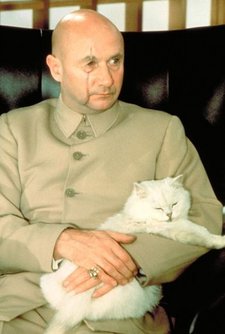
The Character: SPECTRE is not -a- character per se, not even a single villain, but rather a gathering of the most excellent and well trained spies and villains that live in the bond-verse. The creepy man on the left is Blofeld, leader of the entire terror organisation, and super-evil evil genius. With an iron fist of terror and middle-management like no other, he continously spreads fear and steals nuclear weaponry from the rest of the world, prompting the world to beg for the worlds' best superspy to take them on, and even he has a problem, fighting them over several long, intricate movies.

Superpowers and the like: While they may all be fairly normal humans and villains, they are backed by a seemingly endless supply of money, an even more endless stream of supposedly free workforce, and rad differently coloured jumpsuits for their soldiers. They have a random assortment of gadgets, and can be seen with both superweapons that would make Dr Doom blush, and spaceships at that.


Why they fail:
SPECTRE's biggest flaw is their entire structure. The upper echelons of the organisation is entirely comprised of evil super-geniuses, each with their own plot to conquer/destroy/ransom the world. As comes with the egghead arrogance, none of these guys seem to be able to work together. Sure, they sit at a large table ever so often, complaining to one another about how the police forces of the world are trying to stop them still. A big issue around their table continues to be Bond. Between them, they've built spaceships constructed to EAT other spaceships, giant nukes capable of wiping a nation out in one big bang, and various super experiments, including brief ties to sly traps, and a huge henchman with metal teeth (awesome right?).

You would think they could merely attack MI6 in Britain and kill Bond with a well-placed nuke. Subterfuge, you say? Don't wanna pull attention to them? Wrong buddy, think again! The name SPECTRE actually means SPecial Executive for Counter-intelligence, Terrorism, Revenge and Extortion. Seriously? I can't even begin to touch at this. What the hell? Revenge? Ah well. SPECTRE comes up with such complicated plots, and the most costly evil lairs ever, hinting at they do have a legal front, and one of these front companies are even shown and fought within in one of the movies. If they just went legal, they would all be super-billionaires, and noone would have any gripe with them. To top it off, most of their villains have no real reason to do what they do. Some of them want to start world wars, a few merely wear claws on their hands and fall into acid for no real reason. In short, SPECTRE couldn't open a door to save eachother, and thus slowly fall into certain doom while the presences at the bigshot table vanish into nothingness. Fail, SPECTRE, fail.


#3: Sauron
The Character: Sauron is the main antagonist of the Lord of the Rings trilogy, a fierce wizard controlling the forces of evil through henchmen and other smart villains. He once held the world of Middle-earth in total control, forcing the forces of good into a last stand of sorts, heavily outnumbered and discouraged beyond belief. He is a constant source of fear and spite in the forces of good, and they are all in terror of a possible new reign in the dystopia that is Middle-earth today. All he needs to do is retake the ring.

Superpowers and the like: Oh man, Sauron is the essence of badass. Not only is he a wizard, but he's also clad in fully covering black spiky armour, and carries a gigantic mace that smashes through the tiny ranks of good like a battering ram against styrofoam. He also carried the one ring, controlling all of the other rings of power scattered throughout the lands, corrupting the hearts of men. As if that wasn't enough, Sauron controls the largest mass of armies in the world, orcs, goblins, evil men, giant elephants, and various evil beasts.

Why he fails: We can completely discount the entire trilogy here. Sauron's one and only major failure that dooms him to the top of this list of failures is the fact that he melees his opponents. And no, I don't mean the fact that he carries a big goddamn mace. In the last stand of the forces of good, Sauron smashes prince Isildur, heir to the throne of the kingdom of man, into a massive rock. Instead of swinging at him again with the massive mace, finishing the forces of good once and for all and cementing his super evil kingdom of excessively bad dental care, he reaches for the damn guy with his hand. THE HAND CARRYING HIS RING WITH SUPER POWERS.

I cannot stress this enough. This misstep doomed Sauron into becoming a lightbulb at the top of his domain, staring powerlessly as a small hairyfooted snotnose dooms his entire kingdom by carrying his ring in front of his ethereal nostrils. Sauron failed out of his own arrogant incompetence.


That's all, folks! I shall return to the inside of my cavernous lair, and wish you a safe journey through the lava pits. Fare thee well, feel free to leave points on villains you think fail ever more, or anything else. Here, or on the forum/blog where it'll be inevitably posted.

Tuesday, January 12, 2010

Thoughts: On being a Game Master

As a man of gaming, the core of roleplaying branded into my upbringing now over a decade ago, I have seen gamemasters capture the attention of a flock of players with ease, spellbinding them and creating perfect atmosphere. I have also seen the direct opposite. Stumbling storytellers who fail to manage their pre-made adventure, turning the experience into a bogged down embarrassment for everyone involved. Noone wants this, least of all those of us who burden ourselves with building the world around the players. Now, I cannot say I am excellent at gamemastering, but nevertheless I thought I’d go over some of the things I think might make a difference. For some this may well help, or you might want to add to my own list of experience. Both are great, and input is appreciated.

Firstly, let’s look at two commonly used words for your chosen profession. Storyteller and Game master. Which one of these would you rather use to describe yourself? If you picked Storyteller, I would urge you to read the following.

A Storyteller, something World of Darkness among other roleplaying systems seems fond of calling you, is a person whom devotes his time entirely to telling a story, either on paper or verbally. He is the sole controller of his chosen fiction, and the directed work may well end up in book form or told to young kids around the globe. You are not a storyteller, regardless of what the books what tell you. Devoting yourself to storytelling in such a way that you are given this label is –negative- for roleplaying, as it means you’re directing your players, and while some may enjoy this lack of freedom, there are no players who will enjoy being told they cannot do something because of an arbitrary decision that they cannot.

A Game Master is the director of a game, as the word implies. He leads and operates from above, making certain all flows nicely, and that his players are all enjoying themselves in the world he directs. Note that storytelling is often a necessary aspect, but the proper way of doing so is to allow freedom, and thus the notion of calling yourself Storyteller is incorrect. A Game master’s job may be to kill the players, to send waves of mini baddies at them, to encourage their investigation of a crime, oversee a player character marriage, but his primary job is to entertain. If your players are not enjoying themselves, you’re doing something wrong, and there’s no shame in this. Every one player likes different things, and catering to everyone’s needs can be a tough task in itself.

Regardless, let’s get on with the show:

Railroading
Railroading is what most new Game Masters fall to by mistake, and it is the act of taking away the players’ freedom in order to carry on the adventure as previously planned. This is wrong. The only case in which it is not wrong, is when the adventure is built around the strict control of the Game Master, and the players know this from the start. In both cases, it’ll be near impossible for you as the overseer to predict every possible idea your players might have, and you will be faced with a time when they inadvertedly steer away from your plans. Don’t despair, and most of all, don’t say they can’t. When you start building invisible walls around the players, their irritation will build, and most players will stop having fun after they start getting shot down for the wrong reasons. Instead, build on their ideas! So they want to desert the convoy they’ve been assigned to help instead of following it around until the bandit attack you planned happens? No problem, go with it! The convoy will face certain doom, and the players might just get hired in the local militia fort to wipe out the bandits instead of following their retreat. Every plan is adjustable, and as many of my friends say, not one of them survive ten minutes with creative players. Never panic, and you will be fine. You can still lead them to the castle where the vampire lies, but if they don’t want to go there immidiately, that should be fine too. You could even create villagers that boo them out for shirking their duties, or begging them to end the blight upon their lands to further the atmosphere of a living world. Practice makes perfect.

Atmosphere
Some players are gung-ho dicemunchers, and scoff at the prospect of your puny descriptions, caring little for the cities that you’ve built, or the frothing mouths of the attacking beasts. Most aren’t. Even those that are will usually enjoy detail to some extent. No player will enjoy static roleplaying, or being bogged down by a three hour combat in which he gets to speak numbers once every fifteen minutes. Small additions of detail go a long way! The warrior hits his opponent for 26 damage? Describe him cleaving into the leg of his foe, crushing the armour beneath his battlehammer. Anything can bee spiced up with short, hasted descriptions, and will help make your game friendly to both you and the others. ”This one enters this square as a move action, and does a bullrush at Billy. 25 against AC. He misses.” – Though that is less numberspeak then most games can fall into, it can still just as well be described as; ”Another orc joins the battle from the rearmost door, buckling his shoulder down to send himself at Billy. A squeal of surprise exits him as he passes you by entirely.”
Of course, there are times when you will need to talk numbers, and don’t feel pressured to use explanations like the above all the time, but spicing it up from time to time will help, I promise. Atmosphere is important outside of combat too. Describe places and people that players pass by or visit, but don’t settle into the Storyteller category, as discussed above. Going into great depths and long monologues will bore all but the hardiest players, and they may as well read a book to get the same enjoyment. Still, a brief explanation of towns people they speak to is appreciated. Groups vary, of course. Experiment, and see how light of an explanation and immersion you can sink into your players and have them riveting for more.

Rule Discussions
There will be a time, unless you’re playing freeform RPGs, when someone in your group will say ”Wait, no, that’s not the way it is here.” And start leafing through his pristine laminated rulebook to show you how wrong you are. This is fine, as long as he doesn’t disturb the flow and enjoyment for the rest of you. Solve arguments over rules during set out pauses or after sessions, and either look up the rules at the same time, or let a player find it and calmly butt in to state the rule during, when it won’t be disruptive. You are not always right, and while anything you say goes, the players may not be enticed to play if you force your own rules on them without alerting them first. I make a habit of telling my players to note down whatever they disagreed with, and take it up when we’re not playing, whether that be a bathroom break, end of session, or pause for phonecall. If I was terribly wrong, i’ll compensate the players somehow, all the way from a retcon, or if it’s far too late for that, maybe that next guard decided that this was a good time to take the security system down for maintenance. If it was a minor issue, most players will be fine if you take note of the rules in the book, and either run with them from then on, or suggest you use yours for the future. (Magic rules in EON, fear my editing wrath.)

I feel this is getting long now, I might add to this in the future, and I implore others to do so too. Just touched on some basic things! SRM out.

Shady Review: Dorian Gray

I had a discussion with one of my shady associates the other day. The topic? Immortality. What would you do to live forever? Would you want to? You probably want to try, at the very least, but as someone whom already is, I can say it's fairly overrated. Gets boring after a few hundred millenia, and the times before theatre were a drag to say the least. Nevertheless, inspired by this topic of neverending debate among egotistical megalomaniacs, I have decided to make the world aware of a man who fell to temptation, and took a vow of immortality. But first a little storytelling.
The year is 1890. Cars look sillier than they do today, and the liberal community was an endangered species. In the midst of the victorian civilization, Oscar Wilde published a novel which in today's world would probably be seen as tame, but back then it was as deviant and vicarious as my assistant's guttermind is today. This novel was named The Picture of Dorian Gray and was recieved with heavily mixed thoughts from his peers, seen as a homoerotical plunge into decadence. The novel took us on the journey of Dorian Gray, a young man who traded his soul for the chance to live forever, and remain forever young. A good deal, right? The film I bring to you was released September 2009, and is according to yours truly one of the best adaptions of the old story to be released on film. But I've kept you long enough, let's get down and dirty. Is immortality any good?

Cool guys don't look at explosions.
Dorian Gray does what it wants very well, the scenery and lighting pulling you into the appropriate era with ease, and the costume department has had a field day with the dresses and suits filling the screen in every scene. The few animations that are in the movie are nicely done, and do not detract from the movie, at least not enough for me to bash it.

My comm device is not working properly.

Ben Barnes enters the role of Dorian Gray, a naive young man returning to his parents' estate as the new lord of the manor. A role he performs with good emotion and superb acting. Dorian is supported by Colin Firth, in the role of Lord Henry Wotton, and Ben Chaplin as the friendly painter Basil. Both perform with excellence, Firth managing to hammer down the charismatic nail appropriate to Lord Henry with much skill. A minus here is Lord Henry Wotton's daughter, whom I personally feel is somewhat forced, but your mileage may vary.

How about a story before we sleep?
Dorian Gray is a story told about the very same, the young man willingly wishing away his soul into the painting his friend makes of him, so that it will suffer the consequences he would normally attract from life. Aging included. As the movie progresses, Lord Henry Wotton manages to push Dorian further into decandence and indulgence, living vicariously through the younger man as Dorian happily takes every opportunity to slake his thirst for lust and experiences.
All things must come to an end however, and the cursed painting begins to attract both vermin and insects to it's filthy visage, plaguing the boy with nightmares and reminders of the soulless creep he has become. The story stays true to the novel mostly, the addition of Lord Henry Wottons' daughter a good decision, and in spite of her somewhat forced intrusion into the story, manages to be alright. An enticing story, and it brings up the question if you would do the same in Gray's shoes.

Conclusion, Conclusion, Conclusion.
Dorian Gray is good, and is watchable by pretty much anyone. The movie does have a somewhat slow pace, so if you're an actionlover, it may be somewhat quiet and held back for you at times, but it makes up for it with it's story. I recommend Dorian Gray, but I do not recommend linking your soul to a picture.

Rating:
87% - 'tis a good movie, and a compelling story. Mandatory -2% for lack of ninja.

Shady Review: Zombieland

Greetings and aloha, young padawans. No doubt some of you are wondering who in the hells I am, and the rest of you may yet feel scorned and abandoned, or simply don't care enough to mind. I am, as once named by a terrible rival of mine; Shady Review Man. I review things, possibly with a mindset of criticism, but usually I am kind enough to pick out movies that are actually good, I leave you to trample the minefield on your own. For a long time, I was subdued and held hostage in a little room in another dimension, powerless to watch as my nemesis walked around pretending to be me. But 'lo and behold, with the inherent power of a paperclip, a hamster, duct tape, and various Review-Gadgets, I have managed to escape the evil lair, and have now returned to bring you a new movie. A delay as this movie is now no longer in cinema, but I had plenty time to compose my thoughts in the alternate realm. The movie we're about to discuss is Zombieland, and it's a recent one, released in the latter part of 2009, for those of you who never go outside, or are trapped in other dimensions. We'll get right into it, I'm itching for some reviewing.

Cool guys don't look at explosions.
If you enjoy grit and realism, this movie will sit well with you. Managing to make zombies look good is a debatably hard task, and Zombieland manages to plow through the entire movie without giving that surreal feel. Effects and makeup are nicely done, and for once this writer could actually sit back and enjoy the movie, which has none of the problems many movies today seem to. Sure, it could probably do with more explosions, but at that point, we'd need ninjas too. (Sadly it does not have too many ninjas. Or pirates. Mileage may vary.)

My comm device is not working properly.
Jesse Eisenberg is the lead character and our narrator throughout the film, playing a young man and felllow nerd known only as Columbus, which assumingly is not his real name, an insecure, genre-savvy (though ironically ignorant) nerd who's returning home in search of his parents. He does a good job, I applaud his adequate acting and managing to not draw it over the top. The show is however stolen in it's entirety by Tallahasse, Columbus trigger-happy travelpartner, played by none other than Woody Harrelson, whom no doubt had great fun shooting this movie. Though a stereotype, (All the main characters are) Tallahasse is perfectly delivered, and there are not many scenes with him that are not either A) Awesome, B) Hilarious, or C) Both. The two of them are joined by two girls, and a heckload of zombies. Sadly the girls are not as brilliant in their acting, if excellent compared to most other zombie flicks, and are grossly overshadowed by both Columbus and Tallahasse. The zombies are hilarious, however, and I take this pause in my review to applaud the actors for their ability to stumble, run, and groan aggravatedly. *bows*

How about a story before we sleep?
Zombieland is -for those of you who have not yet managed to figure this out from the name - a zombie movie. Thus, the plot is naturally revolved around zombies to a certain extent. In this case, Tallahasse and Columbus, and later the two ladies traverse America in search of a place to rest their heads and call home, all the while bringing destruction to rampaging braineaters and trying to survive. The plot is obviously nothing much to write home about, but the delivery is well executed, making it a very enjoyable story to follow, and even the over-the-top action sequence awarded to Tallahasse (of course he has one.) manages to not break the flow. This movie is filled with small gems and many a chuckle, I don't want to spoil it for you.

Conclusion, Conclusion, Conclusion.
The mere conclusion about Zombieland that SRM has to offer is; Watch Zombieland. If you have humour, or like action, or enjoy zombiesplatter, or just like to watch women making men look like idiots, or you like rollercoasters, you will enjoy this movie. If you like more than one of the above, you will love it. If you don't, you need to watch it again, and not sleep this time. Perhaps one of the greatest zombieflicks ever, Zombieland is in a class of it's own, though it's not as serious as others. If you go in expecting a gritty survivalist scenario where they're all hounded by the military and trying to uncover some tense plot, go watch 28 days later, or the crappy sequel. Go watch any thriller in fact. Zombieland has the attitude saying killing zombies and living in a post-apocalypse world can be entertaining, and it manages to pull it off.


Rating: Zombieland has the official SRM Stamp of Approval. It gets a whopping 98% out of one hundred. Two percent minus for lack of ninjas.